
Is in the keg. Took the final gravity reading at 1.015, a bit higher than what I expected, especially given the large, highly-active starter that I pitched. But, it has a nice color and taste, even though flat. Now I just wait for carbonation.
wordpress-seo domain was triggered too early. This is usually an indicator for some code in the plugin or theme running too early. Translations should be loaded at the init action or later. Please see Debugging in WordPress for more information. (This message was added in version 6.7.0.) in /home/xs0h25qlchu7/public_html/withereddewlap.com/wp-includes/functions.php on line 6114Is in the keg. Took the final gravity reading at 1.015, a bit higher than what I expected, especially given the large, highly-active starter that I pitched. But, it has a nice color and taste, even though flat. Now I just wait for carbonation.
Recently brewed two clones: Founder’s Breakfast Stout and Stone Cali-Belgique. I’ve put the recipes in below, including the BeerXML files.
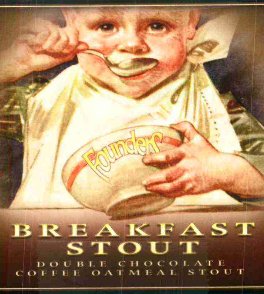 I just moved the two to the secondary last night. I added 2oz of Grand Cru to the Breakfast Stout and .5 oz of Cascade and 1.0 oz of Centennial to the Cali. Tasted both out of the primary and they were delicious. I used both a refractometer and hydrometer to see the gravity progression and to continue to test the comparison between the readings. Each seems to be on target coming in at around 1.018 and 1.016 respectively–and there’s still a bit more time in the secondary where some action will take place. I’ll bottle the Cali-Belgique for a wedding but keep some back for the All-American Homebrew Competition; a part of the Cincy Winter Beerfest.
I’m planning my next brew, which will be a Hopslam clone, and I may try to get it in before the All-American Homebrew Competition deadline, but it will be a very tight squeeze on this one. I went out to JW Dover’s homebrew store in Westlake yesterday to fill some of the holes in my inventory and had one fortuitous encounter and learned one thing I didn’t know–so it was worth the trip. First, I met the owner and proprietor Jerome Welliver and Tom ? one of the brewers who offered to provide me with yeast slurry from one of their brews. All I have to do is bring in a sanitized mason jar and they’ll fill it up. That kicks ass. I was looking for the 1056 in their yeast cooler and then I got to talking with Tom and he offered. For me this means several things: first, the slurry will be a big pitch, meaning energetic and complete attenuation/fermentation; second, it is second generation from a professional brewery; third, I hope it’s a connection that I can maintain. Second, in the grand scheme of things, what I learned is that Jerome is not only the owner and proprietor of JW Dover, but Black Box Brewing Company, which now owns the label for Crooked River and is brewing up their old recipes.
This also sparked in me two notions, one tempting the other possibly stupid. First, to brew one beer a week for the year. Don’t know if I can pull it off. But I’d like to try. I’m behind right now, but have the ingredients to brew the Hopslam and a Flanders Red, which I could so this coming week and it would put me on track for January. Second, I’m considering the Lenten trial of drinking only beer until Easter. I would be hoping to drop some pounds and let’s face it, beer tastes better than the Almased liquid diet. And besides: it’s beer! Three times per day.
We’ll see. I’m looking forward to heading out to Black Box Brewing this week to pick up the slurry and brewing up a Hopslam clone.
Recipes:
BeerSmith Recipe Printout - www.beersmith.com
Recipe: Breakfast Stout
Brewer: Tom Hayes
Asst Brewer:
Style: American Stout
TYPE: All Grain
Taste: (35.0)

Recipe Specifications
--------------------------
Batch Size: 5.00 gal
Boil Size: 5.72 gal
Estimated OG: 1.093 SG
Estimated Color: 57.9 SRM
Estimated IBU: 64.8 IBU
Brewhouse Efficiency: 75.00 %
Boil Time: 60 Minutes

Ingredients:
------------
Amount        Item                                      Type         % or IBU
13 lbs 3.2 oz Pale Malt (2 Row) US (2.0 SRM)            Grain        74.66 %
1 lbs 6.4 oz  Oats, Flaked (1.0 SRM)                    Grain        7.92 %
1 lbs         Chocolate Malt (350.0 SRM)                Grain        5.66 %
1 lbs         Roasted Barley (300.0 SRM)                Grain        5.66 %
8.0 oz        Caramel/Crystal Malt -120L (120.0 SRM)    Grain        2.83 %
5.3 oz        Carafa III (525.0 SRM)                    Grain        1.87 %
4.0 oz        Black (Patent) Malt (500.0 SRM)           Grain        1.41 %
1.10 oz       Nugget [13.00 %]  (60 min)                Hops         37.3 IBU
2.50 oz       Williamette [5.50 %]  (30 min)            Hops         27.6 IBU
2.50 oz       Williamette [5.50 %]  (0 min)             Hops          -
1.50 oz       Chocolate, unsweetened baking nibs (Boil 1Misc
2.00 oz       Kona Coffee (Secondary 1.0 weeks)         Misc
2.00 oz       Sumatran Coffee (Boil 10.0 min)           Misc
2.50 oz       Chocolate, Dark Baker's (Boil 10.0 min)   Misc
1 Pkgs        American Ale (Wyeast Labs #1056)          Yeast-Ale


Mash Schedule: Single Infusion, Full Body
Total Grain Weight: 17.68 lb
----------------------------
Single Infusion, Full Body
Step Time     Name               Description                         Step Temp
60 min        Mash In            Add 22.10 qt of water at 170.5 F    158.0 F
10 min        Mash Out           Add 8.84 qt of water at 196.6 F     168.0 F
BeerSmith Recipe Printout – www.beersmith.com
Recipe: Stone Cali-Belique IPA
Brewer: Tom Hayes
Asst Brewer:
Style: American IPA
TYPE: All Grain
Taste: (35.0)
Recipe Specifications
————————–
Batch Size: 5.00 gal
Boil Size: 5.72 gal
Estimated OG: 1.076 SG
Estimated Color: 6.8 SRM
Estimated IBU: 64.9 IBU
Brewhouse Efficiency: 75.00 %
Boil Time: 60 Minutes
Ingredients:
————
Amount Item Type % or IBU
13 lbs Pale Malt (2 Row) US (2.0 SRM) Grain 92.86 %
1 lbs Caramel/Crystal Malt – 20L (20.0 SRM) Grain 7.14 %
0.64 oz Pearle [8.00 %] (90 min) Hops 16.3 IBU
0.43 oz Magnum [14.00 %] (90 min) Hops 19.1 IBU
1.00 oz Centennial [10.00 %] (Dry Hop 3 days) Hops –
0.50 oz Chinook [13.00 %] (Dry Hop 3 days) Hops –
2.00 oz Centennial [10.00 %] (15 min) Hops 29.5 IBU
1.00 items Whirlfloc Tablet (Boil 15.0 min) Misc
1 Pkgs Belgian Golden Ale (White Labs #WLP570) Yeast-Ale
Mash Schedule: Single Infusion, Full Body, Batch Sparge
Total Grain Weight: 14.00 lb
—————————-
Single Infusion, Full Body, Batch Sparge
Step Time Name Description Step Temp
60 min Mash In Add 17.50 qt of water at 162.5 F 151.0 F
Interesting article in the Cleveland.com blog about GLBC and its possible plans for the future…
I got my recipe from Brewer’s Friend, and it was a recipe posted by Cameron. He also has a YouTube video showing how he went about it.
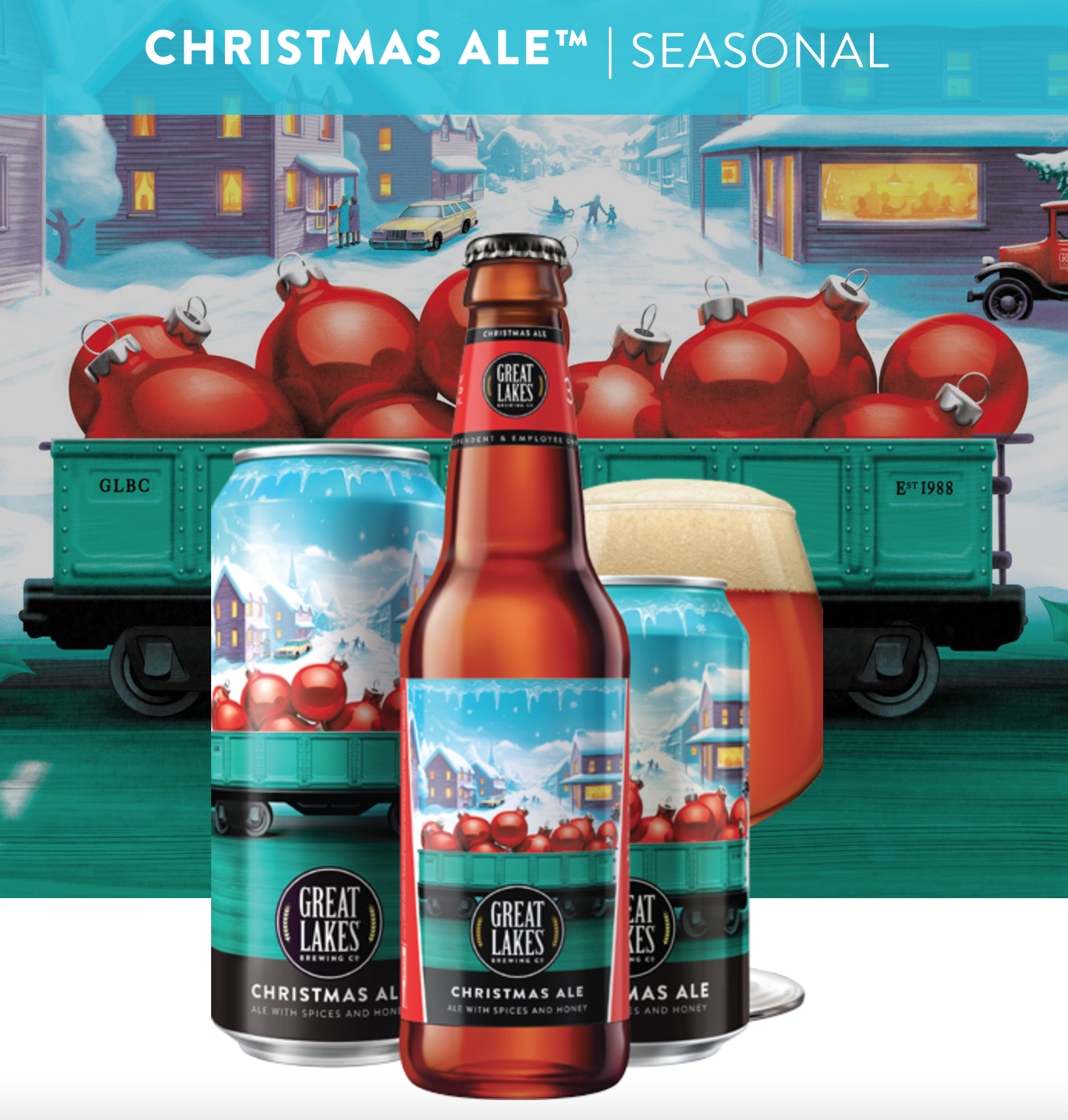
Well it was that time of year again for the Christmas Ale to come rolling out, and I had my fill of it over the holidays. I’ve never tried brewing a clone of the beer, so this year I thought that I would. I got to it a bit later than I would have liked, but the five gallons I got will carry me through the snowy months as I brew Stout and then, in March, and Oktoberfest.
| Amt | Name | Type | # | %/IBU | Volume |
| 12 lbs | Pale Malt | Grain | 1 | 78.0 % | 0.94 gal |
| 1 lbs 3.2 oz | Caramel/Crystal Malt – 40L (53.4 SRM) | Grain | 2 | 7.8 % | 0.09 gal |
| 12.8 oz | Wheat, Flaked (1.6 SRM) | Grain | 3 | 5.2 % | 0.06 gal |
| 5.1 oz | Special Roast (50.0 SRM) | Grain | 4 | 2.1 % | 0.03 gal |
| 1.0 oz | Roasted Barley (300.0 SRM) | Grain | 5 | 0.4% | 0.00 gal |
| 1.0 oz | Liberty [4.30 %] – Boil 60.0 min | Hop | 6 | 11.6 IBUs | — |
| 1.0 oz | Liberty [4.30 %] – Boil 15.0 min | Hop | 7 | 5.7 IBUs | — |
| 1.0 oz | Ginger Root (Boil 12.0 mins) | Herb | 8 | — | — |
| 1.0 oz | Cascade [5.50 %] – Boil 11.0 min | Hop | 9 | 5. IBUs | — |
| 4.0 oz | Cinnamon Stick (Boil 5.0 mins) | Spice | 10 | — | — |
| 1 lb | Honey [Primary] | Honey | 11 | 6.5% | 0.08 gal |
I had to make some modifications based on the ingredients I had on hand, but this is the recipe I ended up with:
My mash volume was 6.52 gallons with a pH of 5.3 and my sparge volume was 3.73 gallons with a pH of 5.2. My pre-boil volume was 8 gallons (I overshot the 7.4 recommended), but boiled it 75 minutes instead of 60 minutes. I mashed at between 154 degrees and 156 degrees for 60 minutes, the sparge took around the same amount of time at 168 degrees. (I donated my spent grains to a neighbor who has chickens.) My measured pre-boil gravity was 1.056, and my measured original gravity was 1.070. I brew using a Grainfather, so the mash was continually re-circulating. I pitched a California Ale yeast (WLP001), for which I created a starter. The yeast was old (September 2021 expiration), so I hedged my bet and also pitched Safale US-05 into the fermenter. The wort went into the fermenter at 68 degrees, I oxygenated it via O2 and a stone prior to pitching the yeast. The beer finished fermenting three days ago, January 3, 2022, and started fermenting within 24 hours. It was a long fermentation as I brewed the beer on December 23, 2021. I’ll move it into a corny keg tomorrow and take final gravity readings at that time.